
Brand identity and Product Design for Mad Hatter, an Amsterdam-based VR venture known for its imaginative approach to immersive technology.

Problem
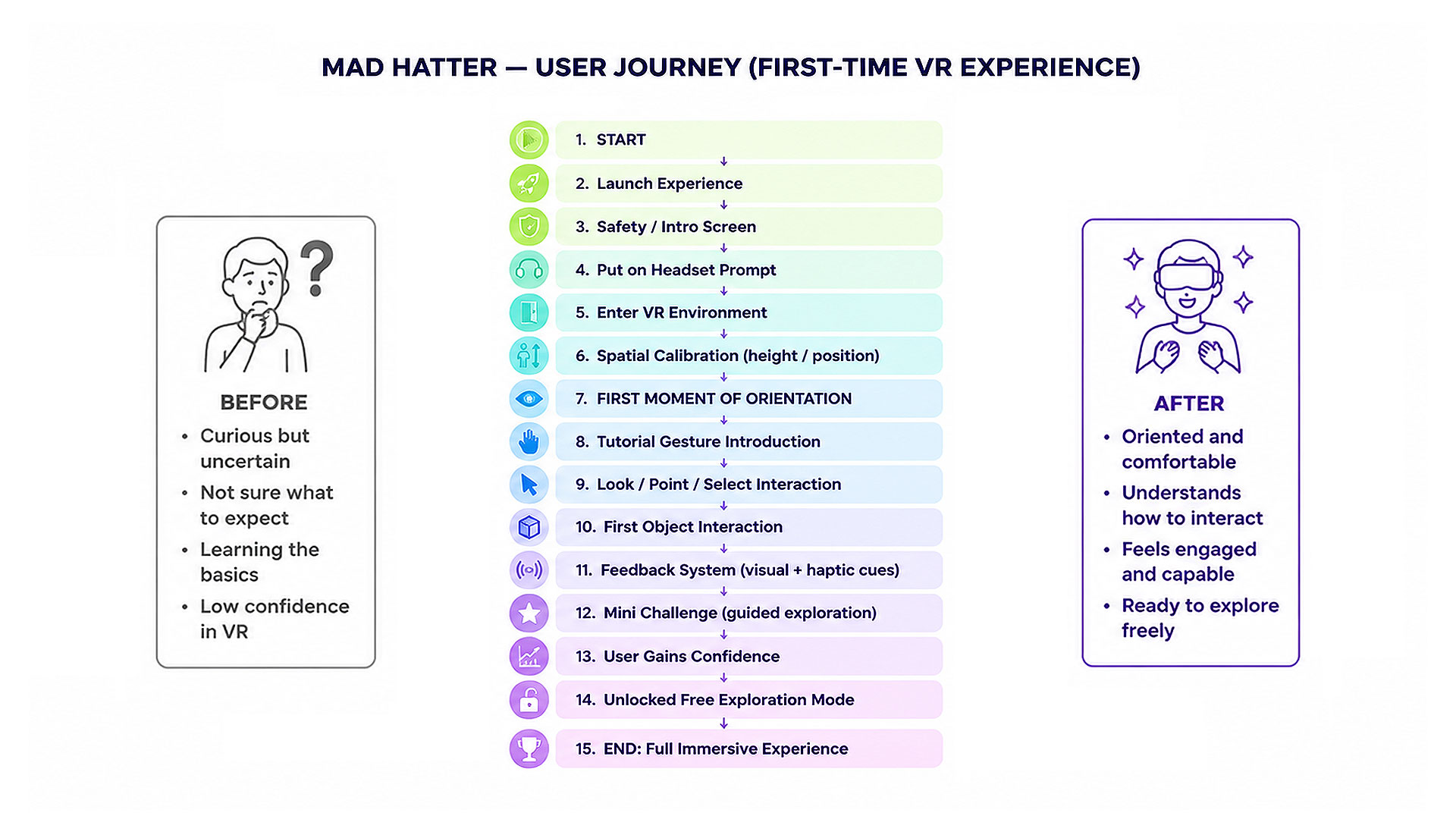
Virtual Reality products often suffer from poor usability due to unfamiliar interaction patterns, inconsistent navigation, and a lack of established conventions. Mad Hatter needed a cohesive design system capable of creating immersive experiences without overwhelming users.
Goal
Develop a scalable design framework that would enable users to navigate virtual environments naturally while strengthening the company’s unique brand identity across all VR experiences.
Constraints
- Emerging technology with evolving UX standards
- Limited user familiarity with VR interfaces
- Need to balance immersion with usability
- Technical constraints related to VR performance and interaction design
- Cross-disciplinary collaboration between designers, developers, and 3D artists
Research
Analyzed existing VR products and interaction models to identify usability patterns and recurring friction points. Reviewed onboarding experiences, navigation systems, and spatial UI conventions to understand how users perceive and interact within immersive environments.
Solution
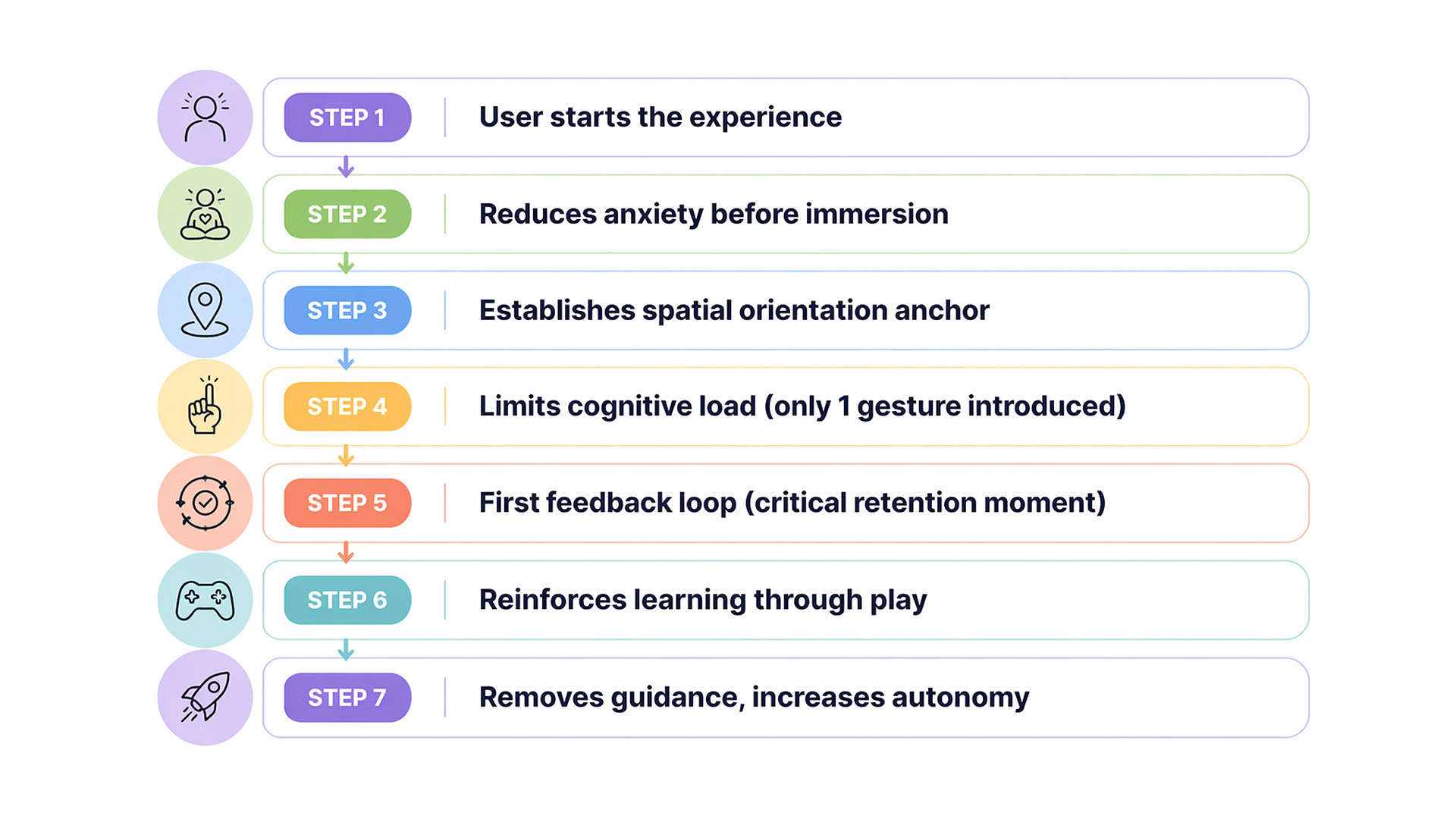
Created a comprehensive VR design system including interaction principles, spatial navigation patterns, branded interface components, and visual guidelines optimized for immersive environments. Established consistent behaviors and visual cues to help users build confidence while exploring virtual spaces.
Outcome
- Improved onboarding experience for first-time users
- Increased navigation efficiency across virtual environments
- Reduced user errors during key interactions
- Created a reusable framework that accelerated future product development
- Strengthened brand recognition throughout the VR ecosystem